The Spiritual Roots of
Cardinal François-Xavier Nguyễn Văn Thuận
In a world that seems on the brink of collapse, Cardinal Văn Thuận is truly a "witness of hope." Hope was, in fact, the leitmotif of his life. Firstly, at the age of 39, when he became bishop in South Vietnam, he chose as his motto the title of one of the most significant documents of Vatican II – Gaudium et Spes: Joy and Hope.
Secondly, during the 13 years in which the communist regime, after taking over South Vietnam, kept him in strict imprisonment.
And finally, in the period that followed, when he committed himself, as Vice-President and then President of the Pontifical Council for Justice and Peace, to working for peace and justice worldwide.
But what did it mean for Cardinal Văn Thuận to be a 'witness of hope,' to live and act guided by an invincible hope?
Hope is the opposite of resignation, apathy, the greyness of everyday life, and pessimism. But it is not merely optimism that closes its eyes to the often harsh and tragic aspects of reality. Van Thuân had a very realistic perception of situations. Without any illusions, in the last years of his life he denounced the fact that entire peoples were threatened with marginalisation, exploitation, and extermination. In French, we could refer to these as three "E"s: émargination, exploitation, elimination. Cardinal Nguyễn Văn Thuận was committed with all his strength to bring about change in the face of these realities.
For him, hope was the future that comes from God, specifically from Jesus crucified, who appears abandoned by God and seems to die in misery, but then is surprisingly resurrected.
This is where the overwhelming power of hope lies, to which Cardinal Van Thuân witnessed by his life, and by which he inspires us to this day.
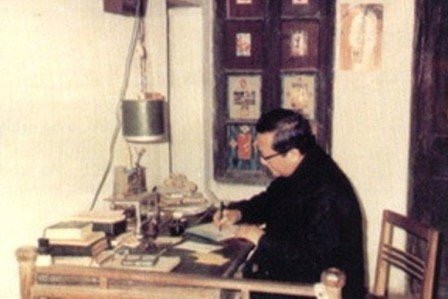
Văn Thuận’s whole life is a journey of hope. But The Road of Hope is also his most famous book. Here is how this volume came about. When Văn Thuận was under house arrest in the village of Cay-Vong, guarded by two policemen, he was troubled by the following question: what can I do for my people?
One night, he recounts, a light came to him: "Francis, it's very simple. Do as St Paul did when he was in prison: he wrote letters to various communities."
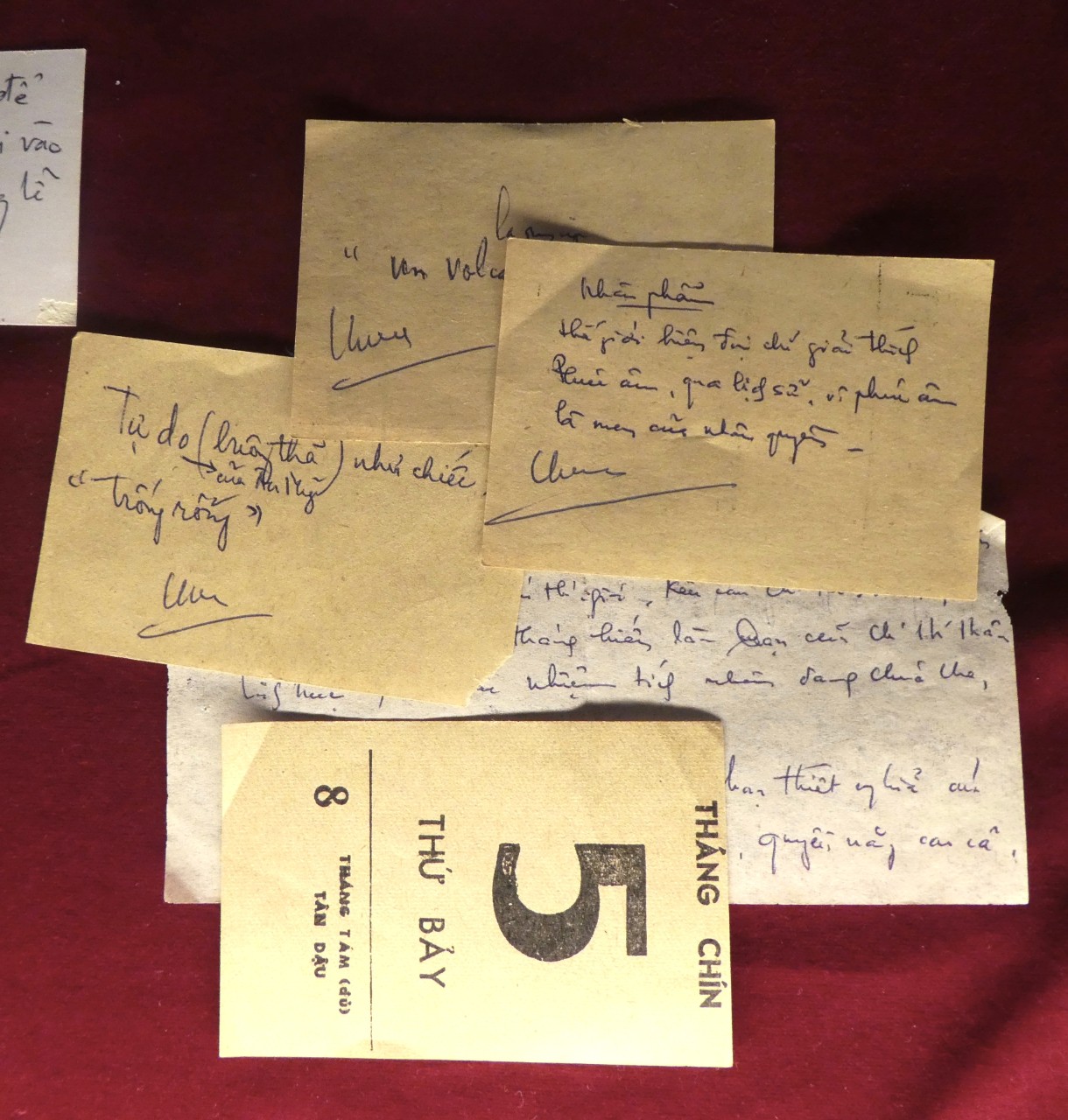
The next morning, I signalled to a seven-year-old boy, Quang, who was returning from Mass at 5 a.m., still in the dark: "Tell your mother to buy me some old calendar pads." Late in the evening, again in the dark, Quang brought me the calendars, and every night in October and November 1975, I wrote my message to my people from captivity. Every morning, the boy came to collect the sheets to take them home and have his brothers and sisters copy the message. This is how the book The Road of Hope was written, now published in 11 languages.[1]
But what is the core of Văn Thuận's journey of hope? What are its basic principles? We could summarise them in three points:
· Hope as a journey with God alone
· Hope as a journey towards everyone without borders
- Hope as a transformation of everyday life
Hope in Văn Thuận’s life did not arise from what he did, nor was it based on secure life circumstances and predictable developments. Rather, it blossomed precisely from the crux of despair, as he recounted during the Spiritual Exercises of 2000 for the Roman Curia at the Vatican:
During my long tribulation of nine years of isolation, in a windowless cell, sometimes under electric light for many days, sometimes in darkness, I felt suffocated by the heat and humidity, on the verge of madness. I was still a young bishop, with eight years of pastoral experience. I couldn't sleep, I was tormented by the thought of having to abandon the diocese, of letting so many works that I had set up for God fall into ruin. I experienced a kind of rebellion in my whole being.
One night, from the depths of my heart, a voice said to me: “Why are you tormenting yourself like this? You must distinguish between God and the works of God. Everything you have accomplished and that you wish to continue doing [...] are works of God, but they are not God! If God wants you to abandon all this, do it immediately, and trust in him!” [...]
This light brought me a new peace, which completely changed my way of thinking and helped me overcome moments that were physically almost impossible. From that moment on, a new strength filled my heart and accompanied me for 13 years. I felt my human weakness, I renewed this choice in the face of difficult situations, and I never lacked peace.[2]
In this way, God for Văn Thuận did not remain only an object of faith but became the centre of his whole life, like the sun around which everything else revolves. "In God I am in contact with everything," he says. "Why complain or worry? I will put everything back in his hands, without fear and without conditions."[3]
What remains and what matters is the present moment. "I will not wait," he said to himself after his arrest. "I want to live the present moment, filling it with love." So, in prison, using sheets of paper that the police gave him during interrogations, he created a tiny vademecum, in which he gradually wrote down more than 300 words from Scripture that he could remember, as an aid to living the Word of God in a concrete way.[4] Similarly, he celebrated Holy Mass with three drops of wine and a drop of water in the palm of his hand. He recounts:
Every time I have the opportunity to stretch out my hands and nail myself to the cross with Jesus, to drink the most bitter cup with him. Every day, reciting the words of consecration, I confirm with all my heart and soul a new covenant, an eternal covenant between me and Jesus, through his blood mixed with mine. These have been the most beautiful Masses of my life! [5]
“Living each moment intensely,” says Nguyễn Văn Thuận, “is the secret to knowing how to live well even that moment which will be the last.” Hence his maxim:
May every moment of our life be
the first moment
the last moment
the only moment.[6]
Living God's choice radically, beyond all works; and living in the present moment, nourished by the Word of God and by Jesus in the Eucharist. This gave Văn Thuận an ever greater inner freedom and became for him a source of invincible hope, fertile ground in which true hope could flourish.[7]
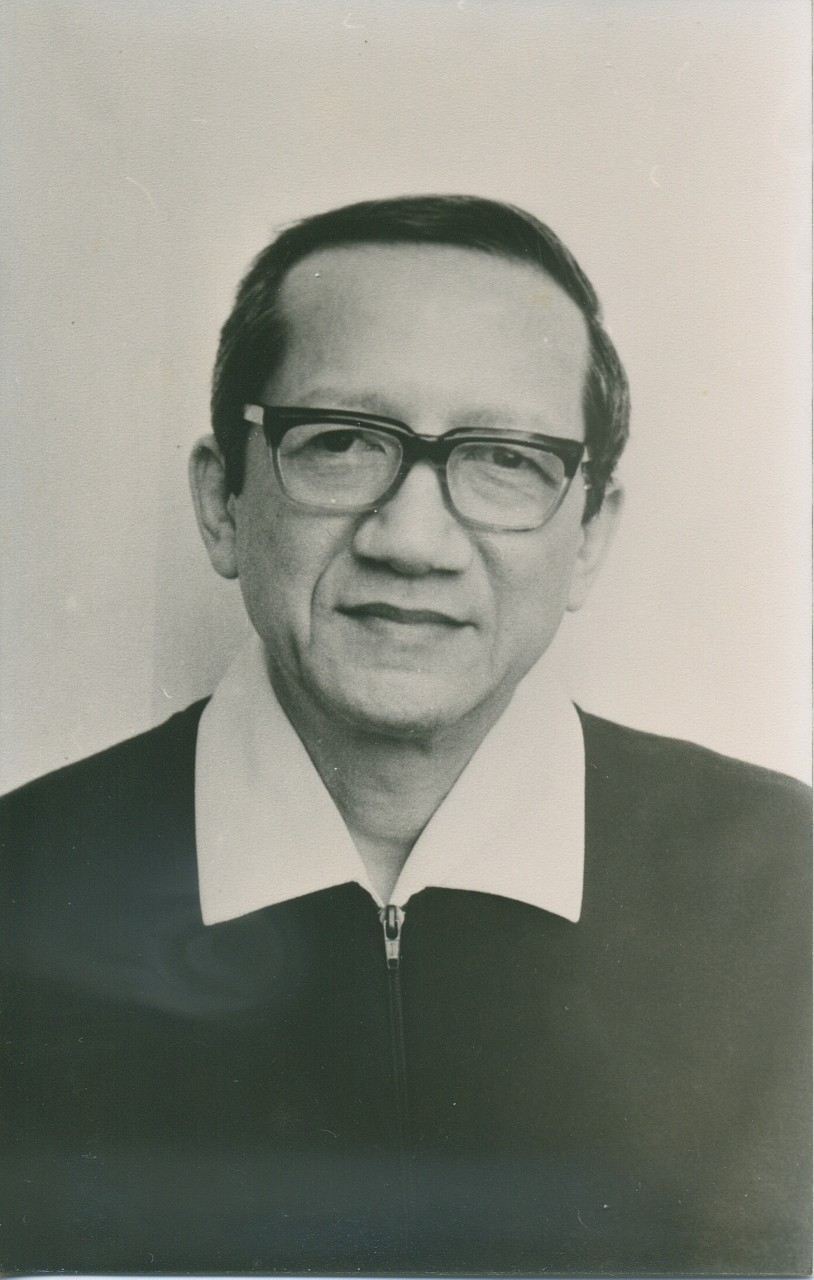
“To love God means to love the world,” writes Văn Thuận in The Road of Hope, observing: “Passionate about God, Mary had the world deeply at heart. To hope in God means to hope in the salvation of the world.”[8] This statement encapsulates both Van Thuân's profound spirituality and his openness to the world. He strongly urges us not to reduce being a Christian to the spiritual dimension, thus separating it from daily life. Instead, it is necessary to unleash a revolution in one's own environment.[9]
There is also a key experience in Văn Thuận’s life for this dimension of hope. It dates back to the first weeks of his imprisonment:
During the journey to North Vietnam, I was chained three times to a non-Catholic parliamentarian known as a Buddhist fundamentalist. The closeness of sharing the same fate touched his heart. […]
On the ship, and later in the re-education camp, I had the opportunity to engage in dialogue with a wide variety of people: ministers, parliamentarians, high-ranking military and civil authorities, religious authorities [...].
In the darkness of faith, in service, in humiliation, the light of hope changed my vision: now this ship, this prison, was my most beautiful cathedral, and these prisoners, without exception, were the people of God entrusted to my pastoral care.[10]
Hope, true hope, arises from this unlimited openness to others. A significant testing ground for Văn Thuận was his relationship with his prison guards. It was difficult to establish a relationship with them.
One night, a thought came to me, he recounts: “Francis, you are still very rich, you have the love of Christ in your heart; love them as Jesus loved you.” The next day, I began to love them even more, to love Jesus in them, smiling and exchanging kind words with them. I began to tell stories about my travels abroad [...]. This stimulated their curiosity and prompted them to ask me lots of questions. Little by little, we became friends.[11]
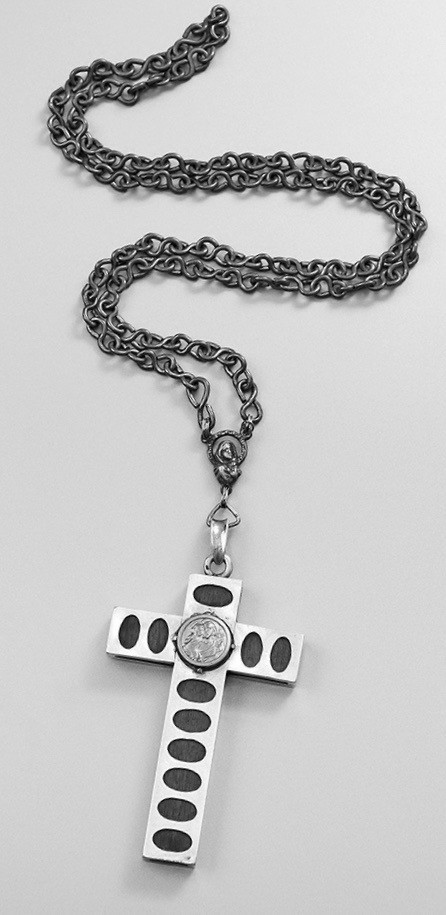
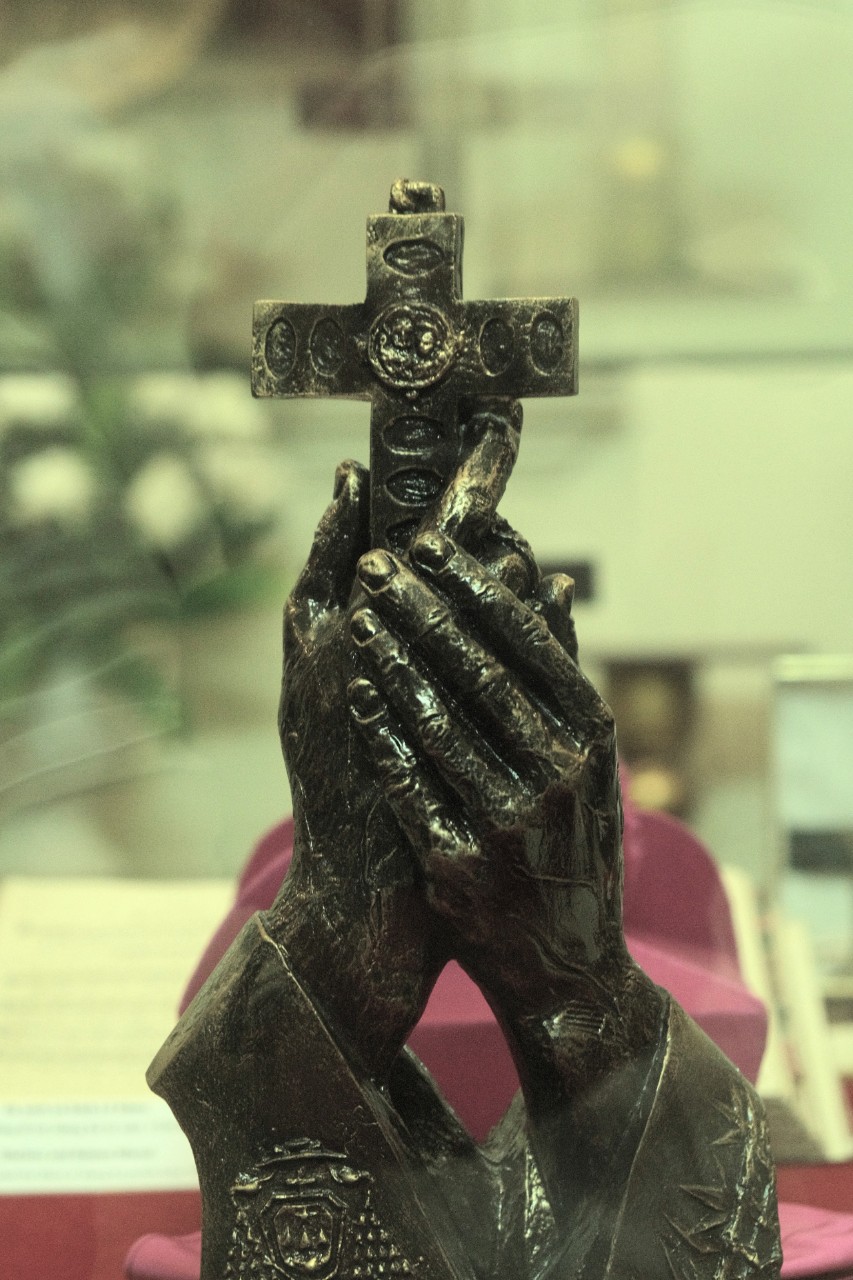
In this way, Văn Thuận won over his guards, so much so that they allowed him to make a wooden pectoral cross and a chain of copper wires with his own hands, which he wore throughout his life as an episcopal cross.
“In that abyss of my suffering,” he observes, recalling those years, “[...] I never ceased to love everyone; I excluded no one from my heart. [...] I must be faithful to the example of my martyred ancestors, to the teaching I learned as a child from my mother.”[12]
According to Văn Thuận, hope as a path towards everyone without boundaries must not remain a pipe dream, but must become concrete. In this regard, he observes in Prayers of Hope:
In the Middle Ages, knights devoted their lives to preserving honour and protecting their homeland. They enlisted troops for distant expeditions to liberate Christ's tomb.
In our day, they fight injustice, oppression, racial discrimination, and dictatorship. They struggle to eliminate epidemics, famine, poverty, illiteracy, and unemployment. In their peaceful struggle, they accept every sacrifice to build a new economic system and establish permanent harmony among nations. They devote themselves to science in the service of humanity. But the main commitment of the knights of our times is dedicated to the liberation of Christ's tomb in souls.
They are knights of love who do not hesitate to go wherever there are people in need of their services: the marginalised, the sick, those hungry for truth, those thirsty for tenderness. Knights of this kind are the least numerous.[13]
Văn Thuận was a knight of this kind and for this reason he was a witness to hope.
Cardinal Văn Thuận was a joyful person with a great sense of humour. This was not only related to his episcopal motto, Gaudium et spes – “Joy and Hope,” but was also an integral part of his vision of hope. Hope united him with the crucified Christ and made him ready for anything.
He led an extremely simple personal lifestyle, both in terms of his home and his clothing – many still remember the K-Way jacket he wore – and he knew how to accept the circumstances of life and the people around him as they were, with their limitations. But then he continually experienced surprises that transformed everyday life.
The communists, he said during his last spiritual retreat in February 2002, make police officers study Latin so that they can check the Holy See's documents and telegrams. One day, a prison guard who was studying Latin asked me to teach him a Latin song. I asked him which one, and he replied: Veni Creator. So, I wrote down all seven verses of this hymn for him, without imagining that he would learn them by heart. A few days later, I heard him singing the hymn as he descended the wooden stairs to do gymnastics [in the courtyard], then while he was washing, and finally as he returned to his room. And he did the same thing every morning.
At first, it seemed a little absurd to me that a communist would sing this hymn, but little by little I realised that when an archbishop can no longer pray and suffers greatly, the Holy Spirit sends a communist policeman to sing and pray! Every morning, he would wake me up and make me sing with him.[14]
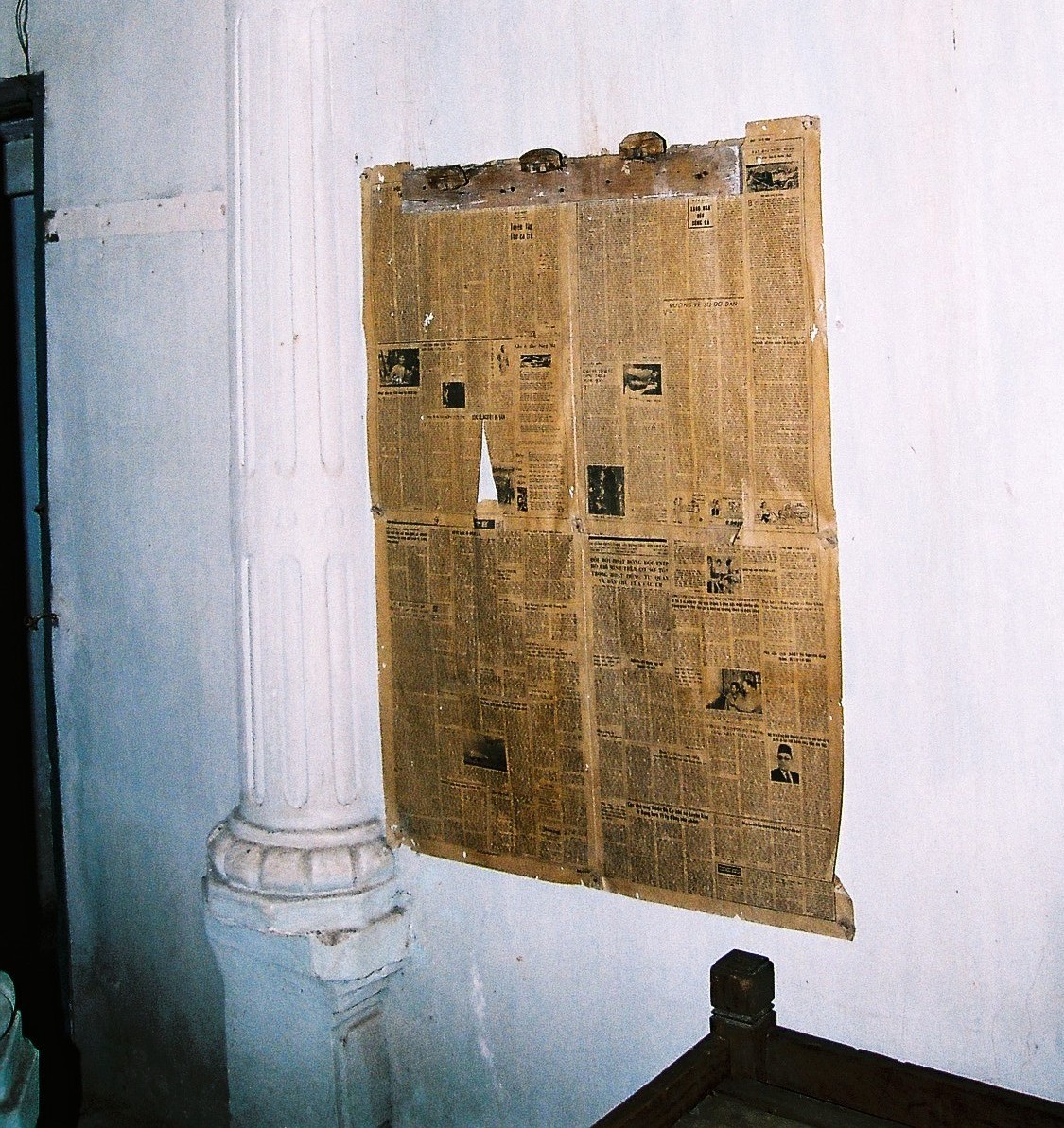
Equally surprising is the fact that, during his solitary confinement in Hanoi, he received a double page from L'Osservatore Romano. It had been seized at the post office and was used as wrapping paper for a small fish that was brought to Văn Thuận. He recounts: “Quietly, without attracting attention, I carefully washed those two pages to remove the smell of fish, left them to dry in the sun and then kept them as a relic.”[15]
Thanks to his good relations with his guards, during his house arrest near Hanoi, Văn Thuận was also able to ordain student priests from different dioceses. Since he was already in prison, unlike other bishops, he had nothing to lose.[16]
He even received a letter from Chiara Lubich, although in reality only his mother was allowed to send him correspondence. “It was a great joy and a great support,” he wrote, “because I felt united with all of you, even though I was isolated and far away.”[17]
What can we conclude from this for our own lives? Hope does not stop at the bare facts. It takes God and his possibilities into account, and thus transforms everyday life and opens up unimagined perspectives. Here is what Văn Thuận writes in Prayers of Hope in a passage entitled “Surprises”:
Until then, I did not suspect that the powerful would be brought low and the humble exalted; that what is done to the least of men is done to God; that sadness will be turned into joy and death into life; that those who sow in tears will reap in joy; that true happiness belongs to the poor in spirit, to those who suffer and weep, to those who are persecuted for righteousness' sake. [...]
How many surprises we will have! What an upheaval for the values of the world![18]
edited by Hubertus Blaumeiser
[1] F.X. Nguyen Van Thuan, Testimoni della speranza. Esercizi spirituali tenuti alla presenza di S.S. Giovanni Paolo II, Città Nuova, Roma 2000, p. 78.
[2] Ibid., pp. 61-62; cf. Dio e la sua opera, in: Preghiere di speranza, n. 83.
[3] Id., Se… Sì, ma… Come…? Perché…?, in: Preghiere di speranza, n. 75.
[4] Id., Testimoni della speranza, pp. 85-86.
[5] Ibid., p. 168; cf. p. 125.
[6] Ibid., p. 79; cf. Il peso del tempo, in: Preghiere di speranza, n. 47.
[7] Anche sulla preghiera Van Thuân ci offre testimonianze toccanti. Cf. Testimoni della speranza, pp. 150-161, e Brevi preghiere, in: Preghiere di speranza, n. 89.
[8] Id., Il cammino della speranza, Città Nuova, Roma 1992, n. 954.
[9] Ibid., n. 970.
[10] Id., Testimoni della speranza, pp. 106-107.
[11] Ibid., p. 98.
[12] Ibid., p. 124.
[13] Id., I cavalieri del nostro tempo in: Preghiere di speranza, n. 39. Cf. anche Guardare i proprio fratelli con lo sguardo di Dio, ibid., n. 35.
[14] Id., Scoprite la gioia della speranza. Gli ultimi esercizi predicati dal Cardinale François-Xavier Nguyen Van Thuân, Edizioni Art, Roma 2006, p. 115. Cf. Testimoni della speranza, pp. 156-157.
[15] Id., Testimoni della speranza, p. 198.
[16] Ibid., p. 225.
[17] Cf. Id., Tutto vince l’amore (Omelia durante un incontro di sacerdoti di vari Movimenti e Comunità), 28.6.2001, in «Gen’s» 31 (2001) p. 185.
[18] Id., Sorprese, in: Preghiere di speranza, n. 26.